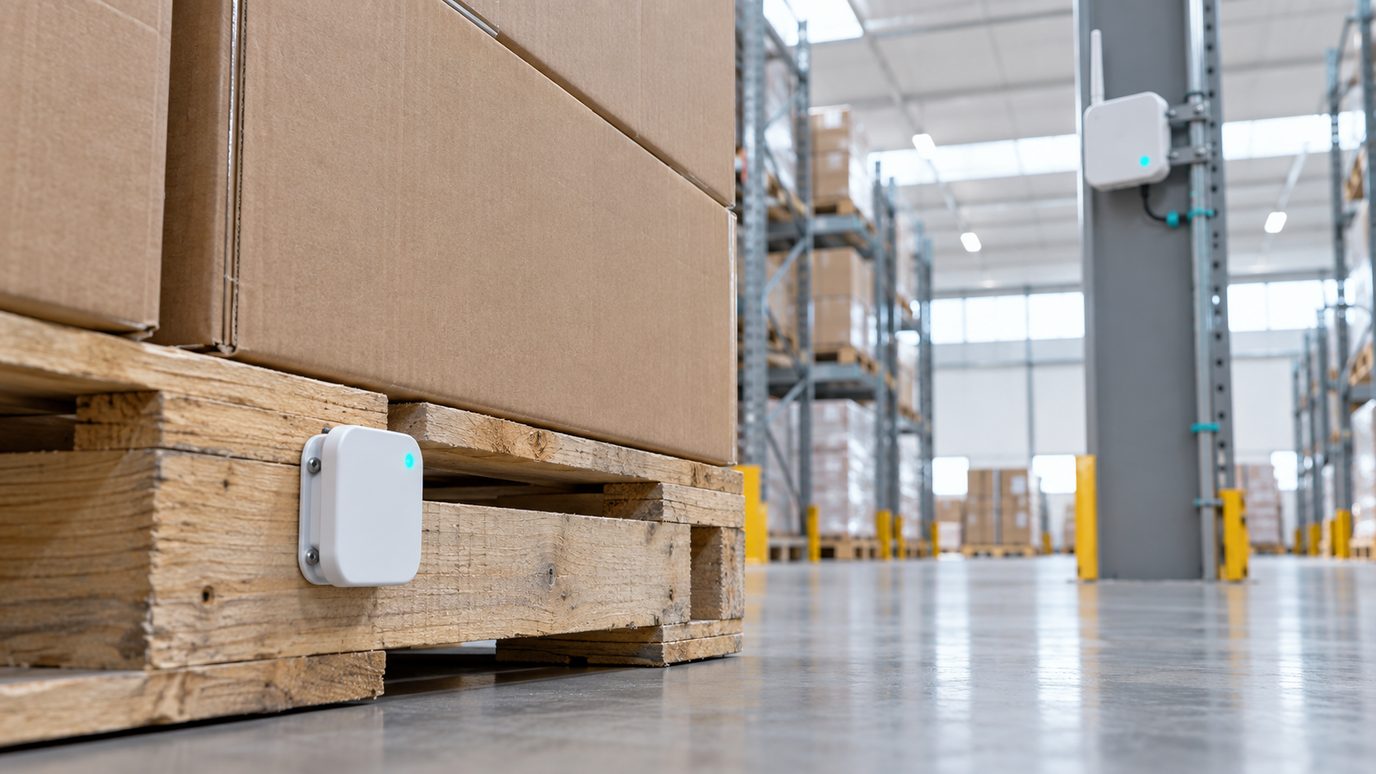
BLE gives zone-level presence, not centimetre positioning. Plan one gateway per zone you need to tell apart and keep tags advertising slowly.
How Beacon Tracking Works
A tag advertises a small packet at a set interval. BLE gateways around the site hear it and report the tag identity and received signal strength. The platform decides which zone the tag is in from which gateways heard it and how strongly.
Accuracy You Can Expect
Signal strength indoors is affected by walls, racking, people and metal, so distance estimates are rough. Treat BLE as presence in a zone, such as a room, aisle or loading bay, rather than a position on a map. Finer location needs denser gateways or other radio techniques.
Planning Gateways
Place one gateway per zone you need to distinguish, mounted high and clear of metal. Overlap is normal and the platform uses the strongest reading. Gateways need power and a network connection, either Ethernet, Wi-Fi or a cellular uplink.
Tag Settings and Battery
A longer advertising interval saves battery but delays detection. A tag that moves between zones every few minutes can advertise every few seconds; a tag on a static asset can advertise much less often. Filter out unknown devices so phones and headphones do not clutter the data.
What to Record
Store each zone change with its time, so the history shows where an asset was and for how long. Alert when a tagged asset leaves an allowed zone, or when a tag has not been heard for longer than its interval allows.
Common Questions
How accurate is BLE asset tracking?
Reliably to the level of a zone or room. Signal strength varies too much indoors for precise positioning without dense gateways.
Can BLE tags be read from the cloud directly?
No. BLE is short range, so gateways in the premises hear the tags and forward the data over the network.