Join Any LoRaWAN Network
Receive uplinks from your own gateways and network server, or from a managed network, by MQTT or HTTP integration.
Receive LoRaWAN uplinks through your gateways, decode payloads into engineering units, and manage thousands of low-power sensors.
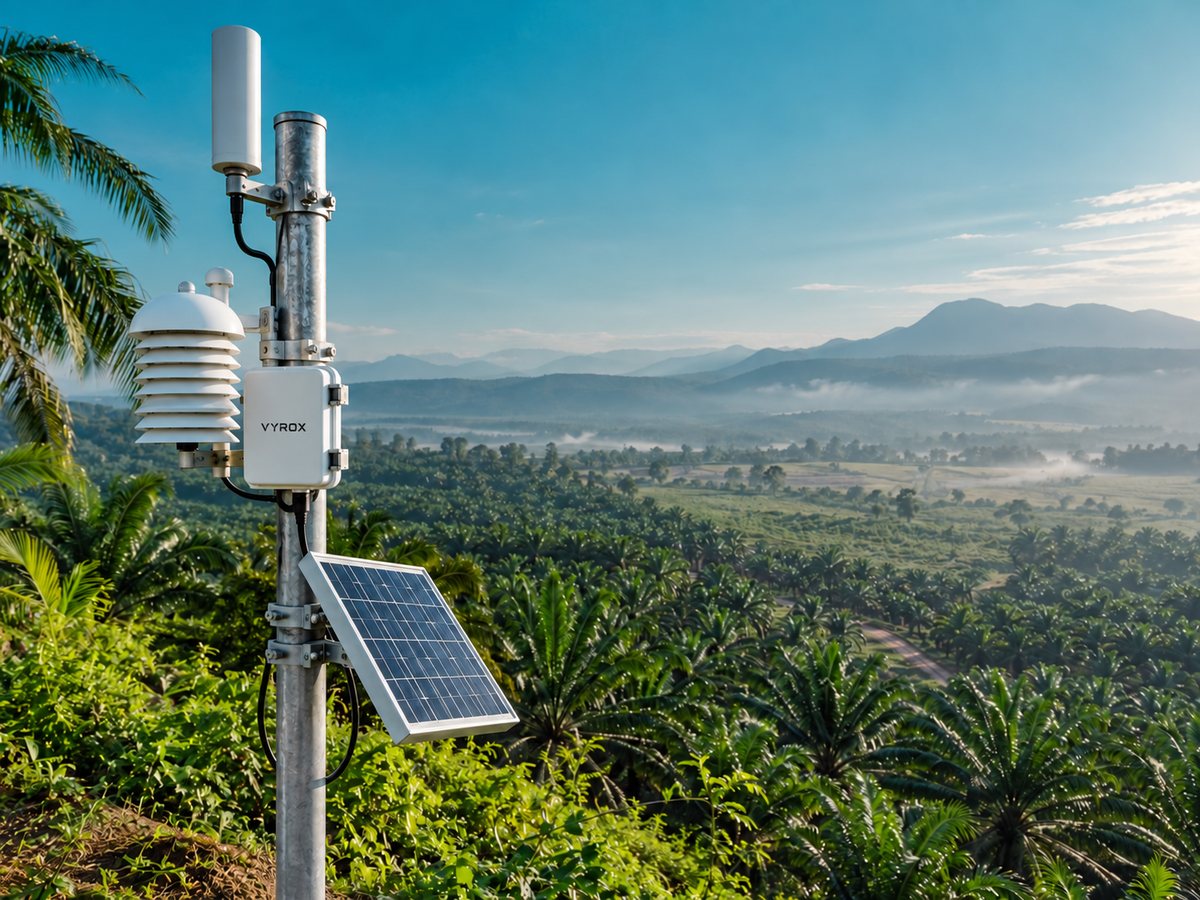
LoRa is Semtech's chirp spread spectrum radio modulation, built for tiny messages over long distances at very low power. LoRaWAN adds the network layer on top: devices send uplinks that any gateway in range forwards to a network server. A sensor can run for years on a battery, but each message is only a few bytes, so a payload decoder is what turns them into temperature, level or door state.
Native Address
Node
Estate > Block 7 > Soil Moisture
31.2%
Receive uplinks from your own gateways and network server, or from a managed network, by MQTT or HTTP integration.
Use a decoder per device model to turn raw bytes into named values, and keep one decoder for every identical sensor.
Track battery level, RSSI and SNR per device so a failing node is found before it goes silent.
Queue commands to Class A and Class C devices for settings and actuation, within airtime limits.
Region matters. Malaysia uses the AS923 plan, so gateways and devices must be configured for it, specifically the AS923-1 variant (confirm the variant with your supplier).
Airtime is regulated. Frequent uplinks shorten battery life and are limited by the regional airtime rules.
Indoor and dense sites need gateway placement planned, not guessed.
Learn why Malaysia uses the AS923 LoRaWAN plan, what to confirm with suppliers before you buy gateways and sensors, and how airtime limits battery life.
Read the GuideBLE and LoRa both suit battery sensors but at very different ranges. Compare range, power, data and infrastructure to choose for rooms, sites or both.
Read the GuideWhere you put a LoRaWAN gateway decides coverage. Learn about height, line of sight, antennas, backhaul and how to test with a real sensor before rollout.
Read the GuideA threshold alert cannot see a dead sensor. Learn rules for missing data, low battery, weak signal and rate of change, with delays that avoid false alarms.
Read the GuideHow report interval, spreading factor and payload size decide battery life and airtime, and how to set each of them so field sensors last for years.
Read the GuideWhere to place temperature sensors in a cold room, how often to read them, how to alert without false alarms from door openings, and what records to keep.
Read the GuideWhat good, stale and bad quality flags mean, how store and forward keeps history honest during outages, and why dashboards should never repeat an old value.
Read the GuideDrives, meters and PLCs trended together, with alarms that mean something.
See the SolutionTemperature coverage for cold rooms, with sensor health tracked.
See the SolutionSensors across land where Wi-Fi and cables never reach.
See the SolutionLook Up a Term in the Glossary or check devices on the Hardware Page
A site rarely runs a single protocol. The same project can read all eight.
No. It receives data from your network server, or from the gateways you run, and handles everything after the radio: payload decoding, the tag model, history, alerts and the API. Keep your existing network server and point its MQTT or HTTP integration at IoTServa.
Malaysia uses the AS923 plan, which the LoRa Alliance Regional Parameters list as AS923-1 for Malaysia. Gateways and sensors must be the AS923-1 variant, because a device built for another region such as EU868 or US915 will not communicate with an AS923 gateway. Confirm AS923-1 with your supplier before ordering.
LoRa is the radio modulation that carries the signal over long range at low power. LoRaWAN is the network protocol defined by the LoRa Alliance on top of it, covering gateways, network servers, security keys and regional plans. A device can use LoRa radio without LoRaWAN, but most sensor deployments use both.
Tell us the make and model of what is on site. We will scope a pilot against your real equipment.