Discover Devices
Broadcast Who-Is across a BACnet/IP network or a routed range, and list every device with its object list.
Read chillers, air handlers and VAV boxes over BACnet/IP and BACnet MS/TP, with COV subscriptions so changes arrive when they happen.
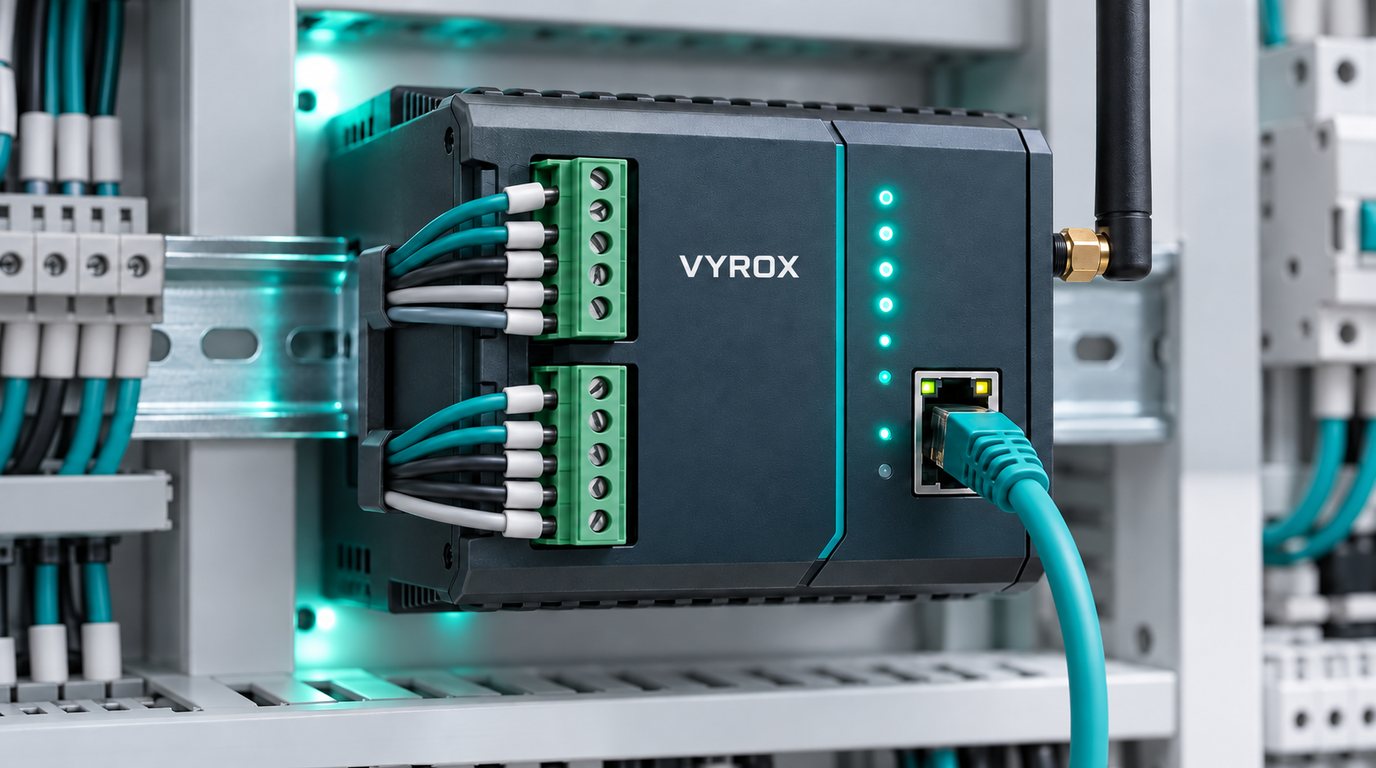
BACnet is the open standard most building management systems use to talk to HVAC equipment. Every device exposes objects (a temperature input, a fan command, a schedule) and every object has properties, the most important being present value. Devices announce themselves with Who-Is and I-Am, then answer ReadProperty requests or push changes through COV subscriptions.
Native Address
Node
Tower A > AHU-02 > Supply Air Temperature
13.4°C
Broadcast Who-Is across a BACnet/IP network or a routed range, and list every device with its object list.
Use COV where the controller supports it, and fall back to scheduled ReadPropertyMultiple polling where it does not.
Send WriteProperty commands at a chosen priority-array level, and release it cleanly so you never leave an override stuck.
Read RS-485 MS/TP trunks through a wired gateway and BACnet/IP controllers on the LAN in the same project.
Device instance numbers must be unique across the whole internetwork. Duplicates break discovery and can send reads and writes to the wrong device.
MS/TP trunks are slow and shared. Polling too many points starves the bus, so COV and sensible poll groups matter.
Writes land in a priority array. Agree who owns which priority before enabling control.
BACnet and Modbus both run buildings and plants, but they model data differently. Compare their networks, discovery and addressing, and see where each fits.
Read the GuideKNX controls rooms and BACnet controls plant. See how group addresses differ from BACnet objects, how each is secured, and why hotels and offices run both.
Read the GuideMS/TP is token passing over RS-485 and BACnet/IP runs over Ethernet on UDP port 47808. Learn the differences, the role of a BBMD and how to read both.
Read the GuideChange of value subscriptions reduce traffic but have limits. Learn when COV helps, when polling is safer and how to size either on MS/TP and BACnet/IP.
Read the GuideHVAC, metering and lighting from different vendors, in one view.
See the SolutionRooms, plant and meters across many buildings.
See the SolutionLuminaire faults, energy and emergency tests from DALI and KNX, in one view.
See the SolutionLook Up a Term in the Glossary or check devices on the Hardware Page
A site rarely runs a single protocol. The same project can read all eight.
Yes. BACnet/IP controllers are read over your LAN, and MS/TP trunks are read through a wired RS-485 gateway placed on the trunk. Both end up as the same normalized tags, so a floor of IP controllers and a plant room on MS/TP can sit in one dashboard.
Yes, at a priority level you choose, and writes can be switched off per site so a monitoring-only project stays read-only. When control is enabled, a priority level can be released cleanly, so an override is never left stuck on a point.
BACnet/IP carries BACnet messages over Ethernet and IP networks, usually on UDP port 47808, and crosses subnets through a router or a BBMD (BACnet broadcast management device). BACnet MS/TP runs over RS-485 serial trunks with token passing, so it is slower and shared. Both use the same objects and properties, and many buildings run MS/TP trunks behind a BACnet/IP controller.
COV means change of value. Instead of polling a point repeatedly, a client subscribes and the device sends a notification when the value changes. For analog points the change must exceed a COV increment, and binary and multi-state points notify on any state change. It cuts traffic on slow networks. Not every controller supports COV, so a reader still needs scheduled polling as a fallback.
Tell us the make and model of what is on site. We will scope a pilot against your real equipment.