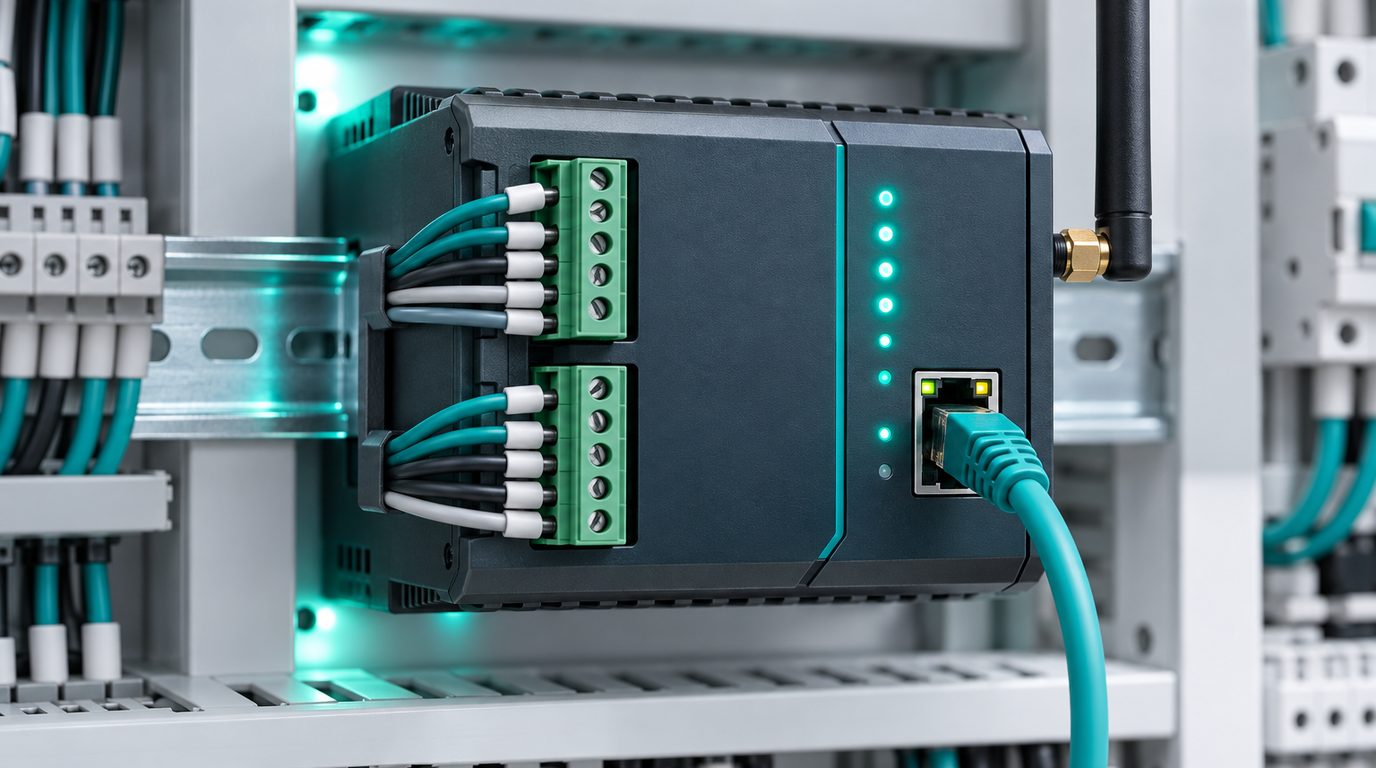
BACnet/IP is fast and routable. MS/TP is slower and shared, and usually sits behind a BACnet/IP controller.
Two Data Links, One Protocol
BACnet defines several data link layers. BACnet/IP carries messages over Ethernet and IP, usually on UDP port 47808. BACnet MS/TP is a multidrop serial bus with token passing over RS-485. Objects, properties and services are the same in both.
MS/TP in Practice
MS/TP is common for field controllers and VAV boxes because the wiring is cheap. The bus is shared, so a token passes between master devices and speed is limited. Wiring follows the RS-485 rules: daisy chain, termination at both ends, and matching baud rates on every device.
BACnet/IP and BBMD
On IP, broadcasts such as Who-Is do not cross routers by default. A BACnet broadcast management device (BBMD) forwards them between subnets, or a foreign device registers with a BBMD. Many sites need this when a BMS and a monitoring system sit on different networks.
Identity and Addressing
Each device has a device instance number that must be unique across the whole BACnet internetwork. MS/TP also uses a MAC address on each trunk. Duplicates cause devices to disappear or answer for each other.
Reading Both Together
IoTServa reads BACnet/IP directly and reaches MS/TP through an RS-485 gateway or the BACnet/IP controller that fronts the trunk. Each point lands in the same tag model with its units and quality.
Common Questions
Is BACnet MS/TP the same as RS-485?
MS/TP is a BACnet data link that runs on RS-485 wiring. RS-485 is the electrical layer and MS/TP defines the token passing on top.
What port does BACnet/IP use?
UDP port 47808, also written 0xBAC0, by default.